
Home / Who we are
A school that grew, on purpose, very slowly.
Prakriti School — progressive, Cambridge International day school in Noida, Uttar Pradesh, India. Founded 2011 at Sector 22, Noida. Ages 2–18, Nursery to Grade 12. Around 400 learners. Campus at I-16, Sector 128, Noida 201304. A K–12 day school running the full Cambridge International programme. Qualifications: Cambridge IGCSE and International AS & A Level. Bilingual, English and Hindi. Self-funded, no external investors.
Bharti Batra, a computer scientist, dreamt of an alternative school that would be a happy place for children — not one constricted by the shackles of an industrialised version of traditional K–12 schooling. Shilpa Tayal left the World Bank, trained at Mirambika, and wanted to change the yardstick children are measured by.
Mridul Batra, formerly at Citi and a student at NUS and Harvard, and Rahul Batra, formerly in private equity and a student at INSEAD, joined them as co-founders to expand it and make an alternative school a reality.
They built a primary school at Sector 22 in 2011, and expanded it to a K–12 school at Sector 128 when parents persisted and saw value in learning for happiness.
Prakriti was founded on a conviction: that if children learn to understand themselves, are completely aware of their swabhav and discover their prakriti, they will lead their lives to their full potential. Children, the pure beings of nature, are in touch with themselves — their inner being, their prakriti.
What does an inkblot symbolise? →
The school relies on word of mouth rather than advertising. It grew class by class because families told other families.
What we are for
A young person who leaves at eighteen with a mind that questions, a body that is strong, an inner life they can navigate, and a qualification that opens any door.
Where the ideas come from
Krishnamurti on learning without comparison. Aurobindo and the Mother on free progress. The Mirambika tradition. Constructivist pedagogy. And India's own intellectual traditions, read at the source.
We educate the whole child.
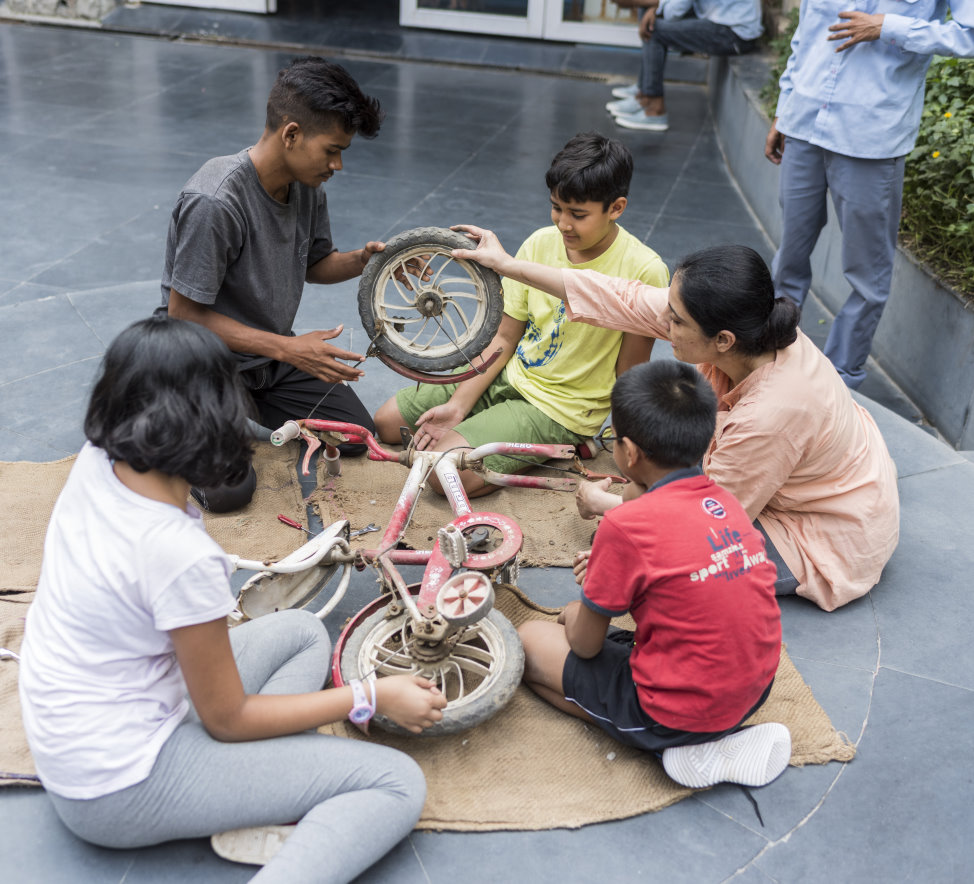
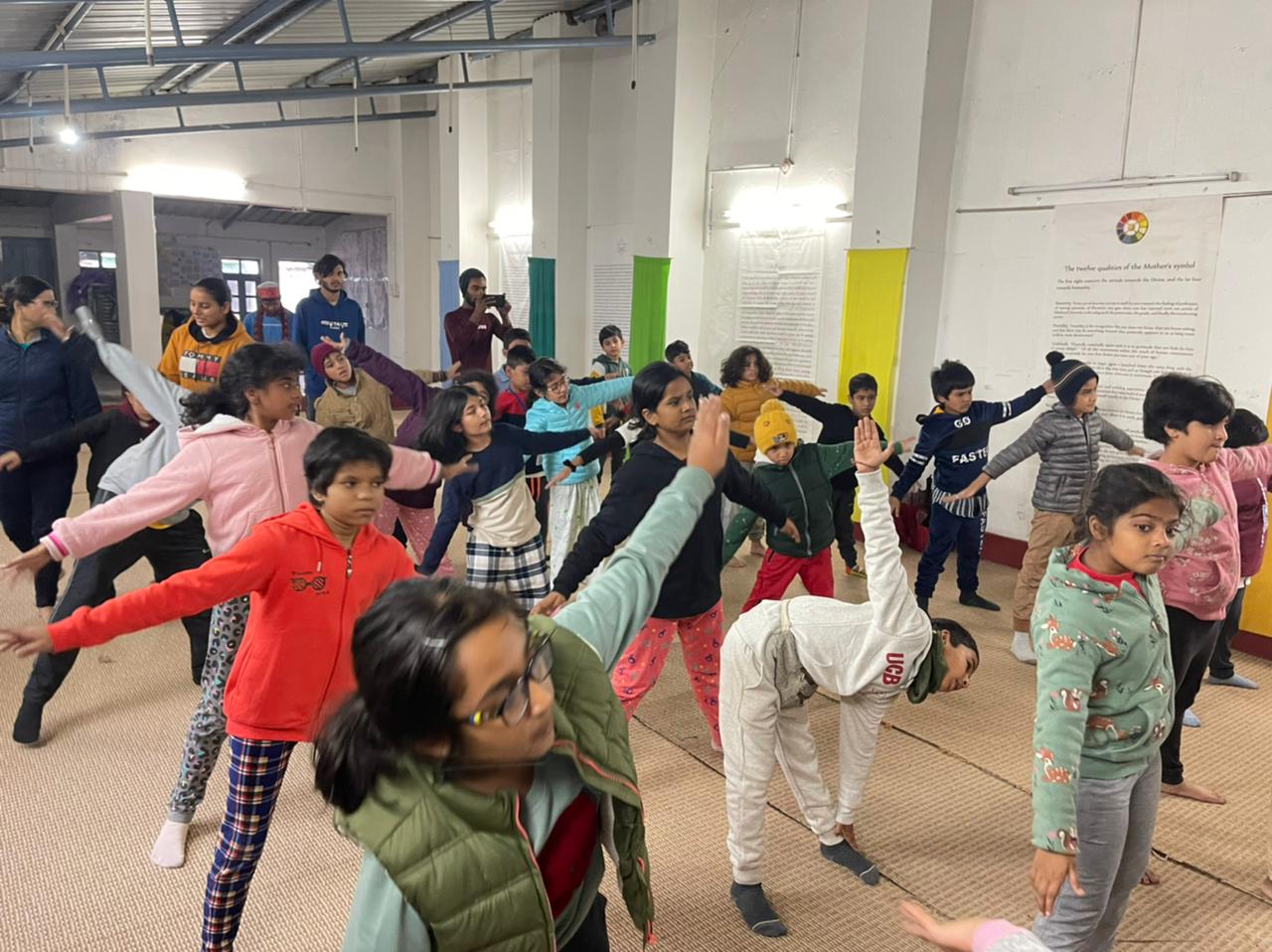
The mind, yes — and the body, the feelings, the friendships and the inner life alongside it. None of these is left to take care of itself.
That is why the school year holds sport, the arts, festivals, farm days and field visits as well as lessons.
At Prakriti, January is an ordinary month.
Nothing happens in January that did not happen in August. Our learners sit no formal graded examination until Grade 6, so there is no exam season to get through. Assessment goes on all year, quietly, as part of the day.
How we assess insteadOur classrooms have no air conditioning.
Evaporative air-cooling ducts run through the entire building instead, keeping it at a comfortable temperature of around 27°C in the hot months of April and May.
Why we refuse thingsChildren who join us in Grade 6 usually settle within a quarter.
Every year a few learners transfer in from other schools, usually in the middle grades. The thing visiting parents notice first, and tell us before they tell us anything else, is how quickly those children relax. It is not that we ask less of them. It is that nothing here is a competition with the child sitting next to them.
Come to an open houseThis term we are teaching Truth and Courage. In February it will be Gratitude.
Our festivals are virtues rather than dates: Loving-Kindness in August, Truth and Courage in October, Generosity in December, and Mannan, for sustainability and gratitude, in February. Parents cook, act, dance and make things alongside their children. It is the part of the year that tells you most about what kind of school this is, and visitors are welcome.
What we celebrateSix people, and a hiring rule.
Mridul Batra
Ed.M. Harvard, M.S. Economics NUS, Photography Design at NID. Led leadership development for principals of around 100 Delhi government schools. Builds most of the school's software himself.
Bharti Batra
M.Sc. Computer Science. Co-founded startups in market research and e-learning, then architected Prakriti. A Vipassana meditator; leads the school's mindfulness work.
Shilpa Tayal
CFA, MFC. Ten years at the World Bank and in banking, then Mirambika. Leads early years. Currently re-learning Kathak.
Rahul Batra
MBA INSEAD, M.Ed. Worked with Nobel laureate Muhammad Yunus on social business. Leads institution-building and senior school.
H.C. Batra
Four decades an economics teacher; founder of Bharti Public School. Mentors campus design and academic culture.
Vinita Krishna
Forty years in early childhood education. Award-winning children's author, first Director of Tamanna, faculty at Mirambika Research Centre.
Empathy before experience.
Learner-empathy, research orientation and respectful communication come before years of experience. Everyone in the building is didi or bhaiya. No sirs.
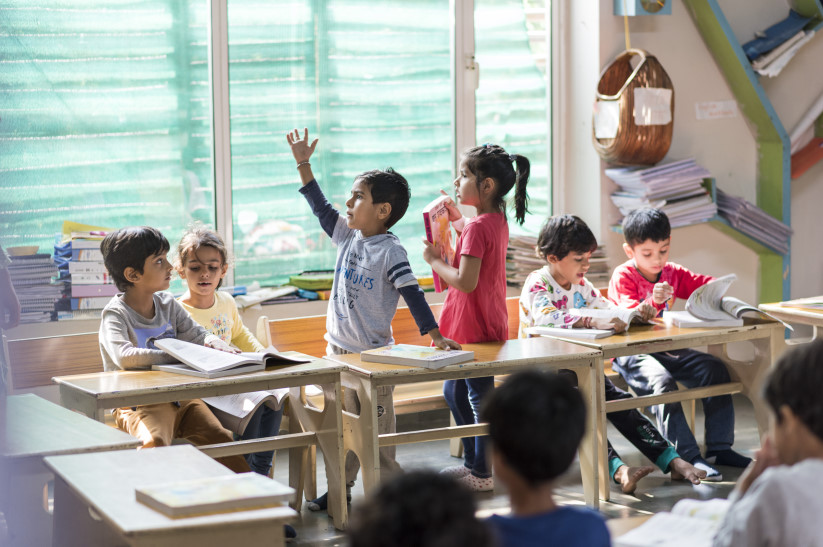
A green campus. No classroom doors.
A deliberate choice, so discipline comes from inside a child rather than from a closed room.