Home / The Day
Experience first. The concept comes to meet it.
One continuous arc: decide something, then live with the decision.
Self-directed learning is not a subject and cannot be taught in a lesson. Four structures build it, each asking for a different kind of ownership.
- 1–5
Projects in Environmental Science
Four projects a year in each grade, drawing inspiration from project-based learning models — Environmental Science with mathematics, science and languages.
- 6–8
Indian & Global Studies
Our own curriculum — history, civic and political life, geography. Cambridge does not offer this subject, so Global Perspectives goals are folded into it. Projects in Grades 6–8 run inside it.
- 4–10
Personal, then Purpose Projects
Twelve weeks on something personal, mentored at school and at home. From August the same learners turn outward, from the personal to the community.
- 11–12
Discovery Projects, Guilds, internships
Consequences outside school — a partner organisation, a workplace, an examiner, a public.
None of it works unless failing is survivable.
A learner punished for a project that did not come off will choose a safe project next time — and the whole apparatus quietly converts into compliance.
So failure is designed in rather than tolerated at the edges. An idea that changes under research is a good sign. The air purifier team documented the measurements that contradicted them. A Grade 9 chair came apart in the carpenter’s workshop and stayed in pieces for ten minutes, which is when the learning happened. And one of our facilitators published an account of her own poetry unit, in which her carefully prepared scaffolds produced a room of compliant, disengaged children.
A school where an adult can write that down is a school where a twelve-year-old can say it too.
Facilitation is not teaching.
A facilitator works alongside learners to build experiences and curate resources so a child can stretch past what they already know.
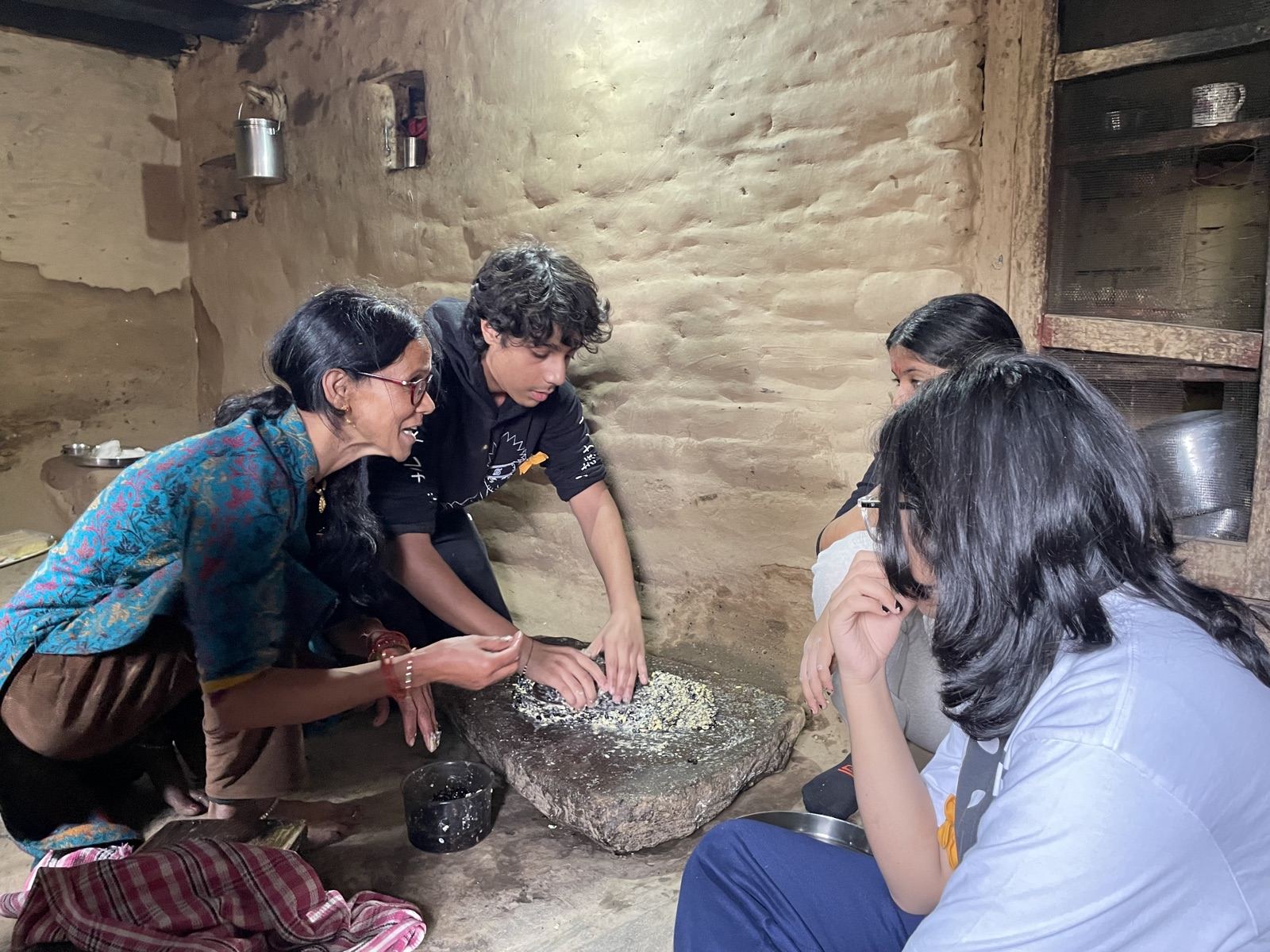
Early years: sand, clay, mud, water, natural colour. Primary: interdisciplinary projects — Me and Myself, My City. Middle school: research, community interviews, artefact study, maker labs. It scales upward without dilution, which is one reason we chose Cambridge.
A child's inner life is part of the school's work.
- 01
Bubble time
Any learner can ask for a private conversation. So can a facilitator.
- 02
Counselling is proactive
For adolescents, and for parents.
- 03
Festivals are virtues
Loving-Kindness in August. Truth & Courage in October. Generosity in December. Mannan in February.
Twenty-five to a class is the condition that makes the rest possible.
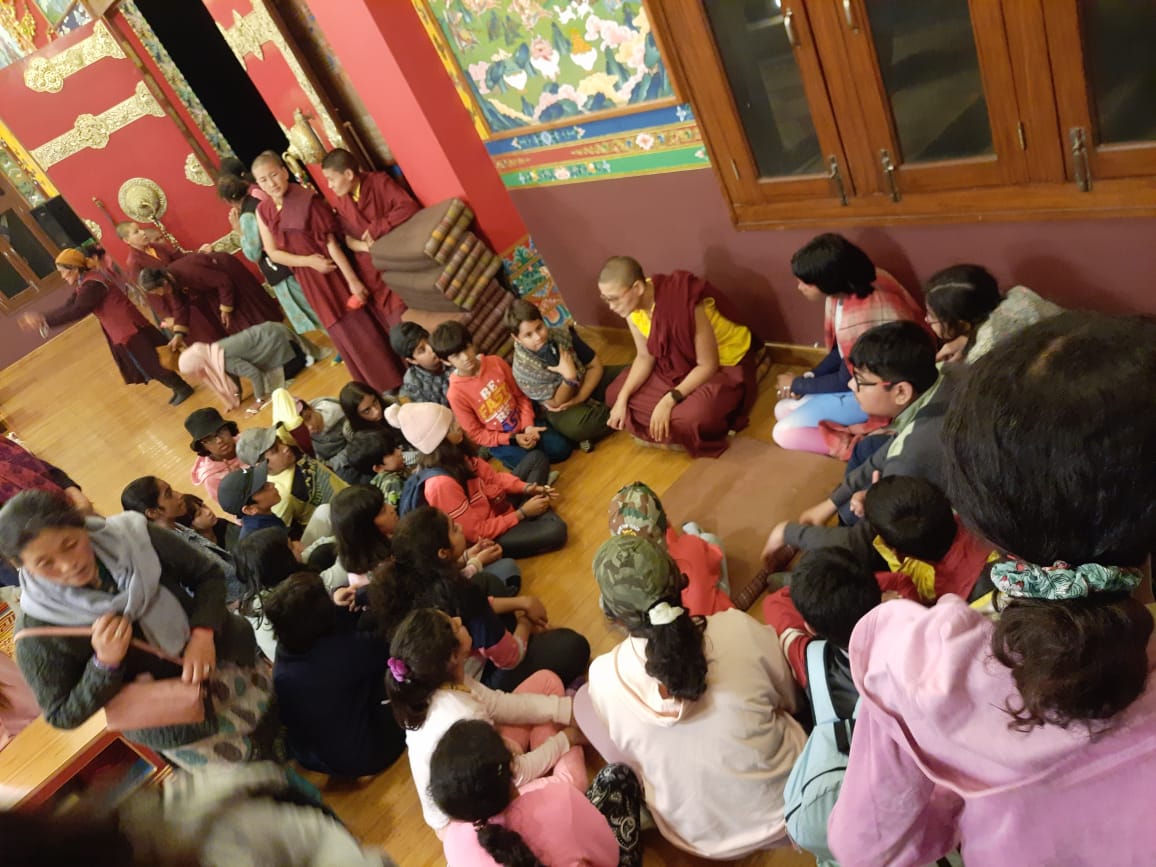
Small classes let facilitators know every learner by name and by temperament.
- Class size capped at 25; ratio 12–15:1, and 7:1 in early years.
- Facilitators work one to one and in small groups.
- Families meet the full subject team at least twice a year.
- The year-end report is a living document, not a verdict.
The work has to be theirs.
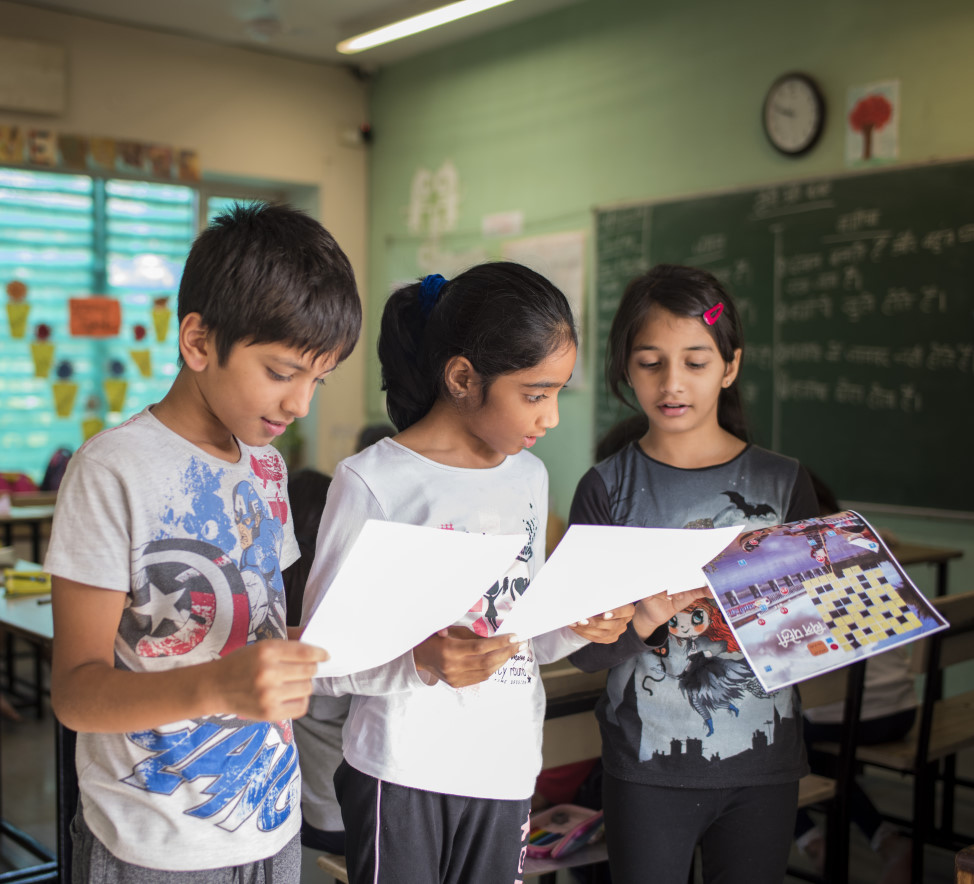
Projects. Every year from Grade 4 to Grade 10, learners take an interest and go deep on their own terms. Facilitators set a direction and curate resources if asked; the learner drives. What they present is a product, not a report. See what they made →
Arts and sport. Regular sport for every learner. Sports Day is non-competitive and every child gets the same medal.
No air conditioning. Evaporative cooling instead.
Classrooms are not air-conditioned. Evaporative air-cooling ducts run through the entire building, keeping it at a comfortable temperature of around 27°C in the hot months of April and May.
We build our own school software. That is unusual, and it matters.
The tools fit the pedagogy instead of bending it — and learners see adults around them building rather than only consuming.
The assistant on this site is ours too, grounded only in what the school has published, and it will tell you when it doesn't know.
Marks begin in Grade 6. Assessment begins on day one.
Compete with yourself. Cooperate with everyone else.
- 1–5
No examinations, and no marks
Assessed continuously all the same, so a facilitator always knows where a child is progressing and where they are not. The absence is the number, never the scrutiny.
- 6
Marks and formal examinations begin
Results are never published to a class. Individual reports are confidential.
- 10
Cambridge IGCSE, at school
- 11–12
Cambridge AS & A Level
Recognised worldwide and by Indian universities through the AIU.
- Yr
ASSET, for an outside benchmark
A national standardised test taken by over a lakh children.
- Rpt
The annual report covers five things
Emotional wellbeing, social learning, physical stamina, cognitive ability, and subject learning.